
Education guide
Wetsuit vs. Swimskin: What to Wear on Race Day
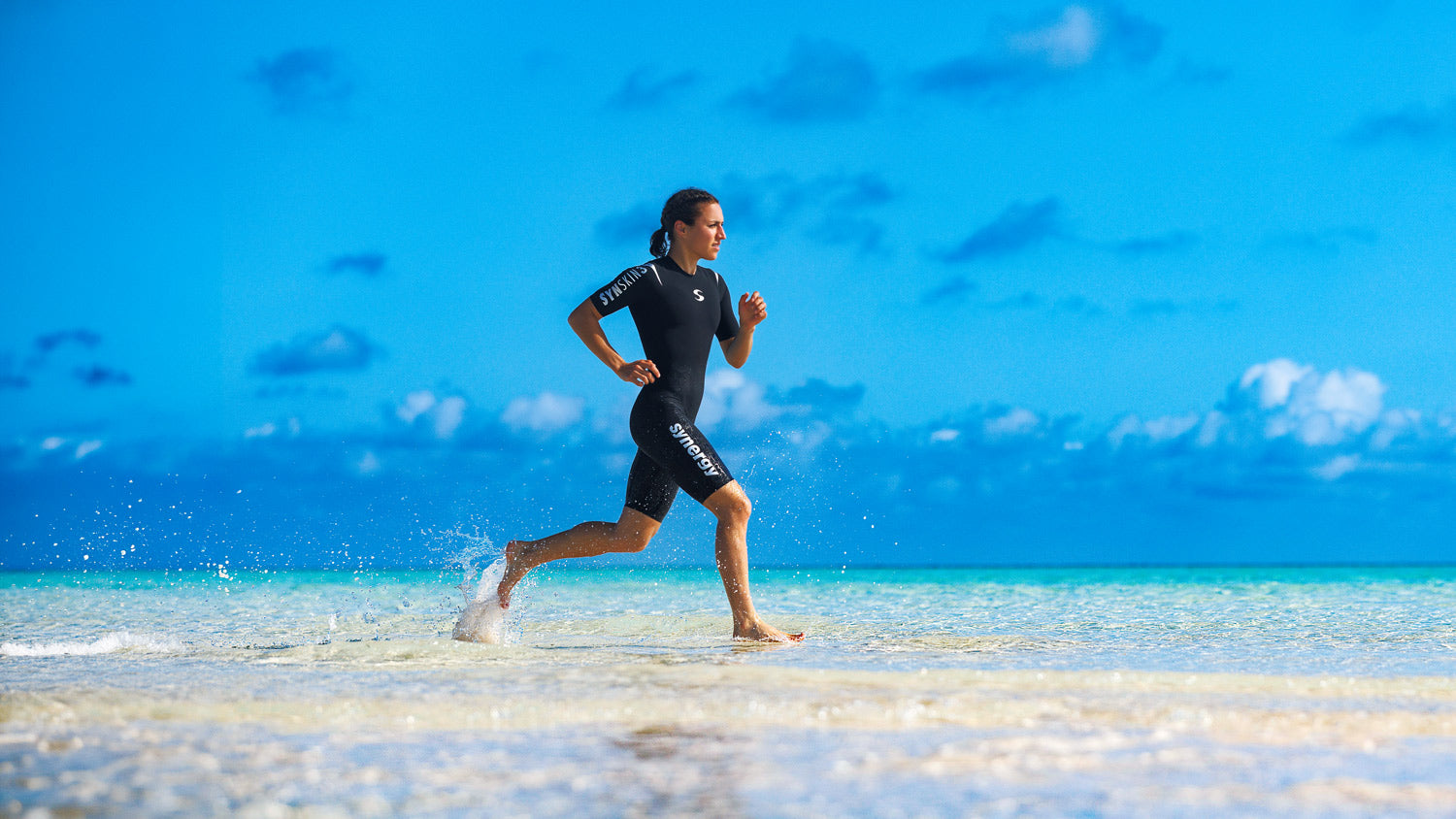
If you are new to triathlon, the wetsuit vs. swimskin question can feel more confusing than it needs to be. Both are worn for the swim. Both can make you faster. But they solve very different problems.
The short version: a wetsuit is usually the bigger performance advantage when it is allowed. A swimskin is the warm-water, non-wetsuit option for athletes who still want a cleaner, faster surface over their race kit.
The basic difference
Triathlon wetsuit

A triathlon wetsuit is made from neoprene. Its two main jobs are buoyancy and warmth. The buoyancy helps lift your body higher in the water, especially through the hips and legs, which can improve body position and reduce drag. The warmth matters when the water is cool enough that a long open-water swim would otherwise cost you energy before you even reach the bike.
A good triathlon wetsuit should feel snug, but not like it is fighting your stroke. It should support your position in the water while still letting your shoulders rotate naturally.
Swimskin
A swimskin is a thin, tight, textile suit worn over your tri suit. It does not add meaningful buoyancy and it is not meant to keep you warm. Its job is to smooth out the seams, pockets, and small wrinkles in your race kit so you move through the water with less drag.
Think of a swimskin as a finishing touch. It is useful, but it is not a substitute for the lift and confidence a wetsuit gives you when wetsuits are legal.
When a wetsuit makes sense
Use a wetsuit when the race is wetsuit-legal and the water is cool enough that you want warmth, buoyancy, or both. For most age-group athletes, especially newer triathletes or anyone who feels less confident in open water, a wetsuit is one of the most helpful pieces of race gear you can own.
The biggest benefit is body position. If your legs tend to sink, a wetsuit can help bring your hips up and make the swim feel less like a fight. That does not just help your swim split. It can also help you exit the water with more control and a little more left for the bike and run.
A wetsuit is usually the right call if:
- The race is wetsuit-legal.
- You want the largest possible swim-speed benefit from your gear.
- The water is cool or borderline cool.
- Your swim is the leg you are most nervous about.
- You want better body position and a calmer open-water feel.
There is one important caveat: do not make race day your first real wetsuit swim. Practice in it. Learn how it feels at race effort, how much body glide you need around the neck, and how you will get it off quickly in transition.
When a swimskin makes sense
A swimskin comes into play when the water is too warm for wetsuits or the race is declared non-wetsuit legal. In that situation, you still have to swim in your tri kit, but a swimskin can make that setup cleaner and faster in the water.
It is especially useful for longer warm-water races, strong swimmers chasing small gains, or competitive athletes who know every detail matters. The benefit is usually measured in seconds, not minutes, but in a non-wetsuit swim those seconds can be worth having.
A swimskin is usually the right call if:
- The race is not wetsuit-legal.
- You are already racing in a tri suit underneath.
- You want a smoother, lower-drag surface for the swim.
- You are racing competitively and care about small performance gains.
- The water is warm enough that a wetsuit would be illegal or uncomfortable.
Just remember that swimskins have their own race rules. Many events require non-wetsuit swimwear to be textile material, and some rules limit how far the suit can cover the arms, legs, or neck. Always check the athlete guide before race week.
What about water temperature rules?
This is where athletes get tripped up, because the exact cutoffs depend on the sanctioning body, race distance, athlete category, and the official race-morning water temperature.
For many long-course age-group events, wetsuits are commonly allowed up to 76.1°F / 24.5°C and prohibited above about 83.8°F / 28.8°C. World Triathlon rules use distance- and age-specific thresholds. For example, some age-group races forbid wetsuits at 22°C and above for shorter swims, while longer age-group swims use a higher cutoff.
The practical takeaway is simple: check your race's athlete guide, then listen for the official water temperature announcement. The final call is often made close to race start, not weeks in advance.
Which one is faster?
In most cases, the wetsuit is faster.
That is not because neoprene is magic. It is because buoyancy changes your position in the water. A higher body position usually means less drag, less kicking to keep the legs up, and a more efficient swim. Strong swimmers still benefit, but athletes with less efficient body position often feel the biggest difference.
A swimskin can be faster than a regular tri suit in a non-wetsuit swim, but it is a smaller gain. It smooths the system you already have. A wetsuit changes the system.
So the honest comparison looks like this:
- Wetsuit: a performance upgrade when rules and water temperature allow it.
- Swimskin: a drag-reduction tool when wetsuits are not allowed.
The simplest decision rule
If the swim is wetsuit-legal and you are comfortable in your wetsuit, wear the wetsuit.
If the swim is not wetsuit-legal and you own a race-legal swimskin, wear the swimskin over your tri kit.
If you are unsure and the race is close to the cutoff, bring both if you can. That way you are not trying to solve a gear problem in transition on race morning.
What we recommend for most athletes
If you are building your first triathlon setup, start with the wetsuit. It gives the bigger benefit, helps in cooler water, and gives many athletes more confidence at the start line.
Add a swimskin later if you race warm-water events, travel to races where wetsuits are often banned, or you are chasing every legal speed gain you can find. It is a great tool, but it is usually the second tool.
The best choice is the one that matches the race conditions and lets you swim calm, efficient, and ready for the rest of the day.